
A successful scleral lens fit does not always guarantee long-term success.
Many patients experience excellent vision and comfort during the initial fitting process, only to return at follow-up visits reporting reduced wear time, fluctuating vision, or increasing discomfort. A slit lamp examination often reveals the culprit: a lens surface affected by deposits or poor wettability (Figure 1).
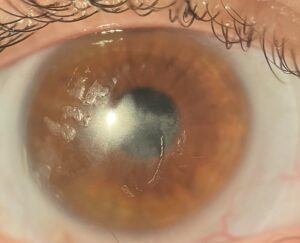
Although frustrating for both practitioners and patients, these issues are among the most common complications encountered with scleral lens wear. Fortunately, understanding the underlying cause can help restore lens performance and improve the overall wearing experience.
Start by Identifying the Root Cause
While deposits and nonwetting often appear together, they are not necessarily caused by the same underlying problem. Differentiating between the two allows practitioners to select the most appropriate treatment strategy rather than simply replacing the lens or adjusting the fit.
Managing Scleral Lens Deposits
Some patients naturally produce a tear film that promotes heavy lens deposition. Protein, lipid, and other tear film components can accumulate on the lens surface over time, reducing comfort, degrading vision, and shortening wear time.
For many of these patients, improving the cleaning regimen is enough to restore lens performance.
Adding an extra-strength cleaner with a daily rub-and-rinse step to the nightly cleaning and disinfection routine can effectively remove the majority of deposits throughout the typical one-to-three-year lifespan of a scleral lens. These cleaners are particularly effective against protein deposits.
When protein buildup becomes more significant, a biweekly treatment with Progent® can provide a deeper clean. If deposits are primarily lipid based, alcohol-based cleaners often produce better results. Matching the cleaning system to the type of deposition helps maintain a cleaner lens surface and extends comfortable wear.
Addressing Surface Nonwetting
A nonwetting scleral lens (Figure 2) can quickly undermine an otherwise successful fit.
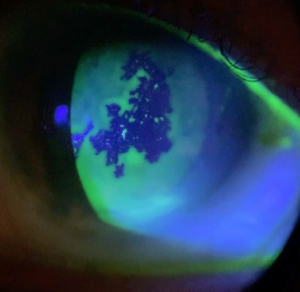
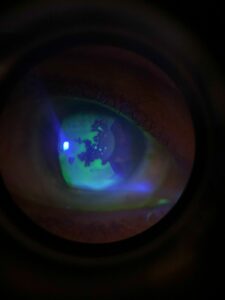
As the tear film breaks up across the lens surface, patients often experience fluctuating vision, increased deposition, and declining comfort. Individuals with ocular surface disease and postmenopausal women are particularly susceptible to this complication.
Surface treatment plays an important role in maximizing wettability.
Plasma treatment should be considered for all newly manufactured scleral lenses. This ionization process removes microscopic contaminants from the lens surface and improves its initial wettability. Applying a polyethylene glycol (PEG) coating further enhances surface wetting while increasing resistance to deposits.
Because the PEG coating gradually wears away, a monthly boost soaking solution can help replenish the coating and maintain these surface properties. Without maintenance, the coating typically lasts approximately six months.
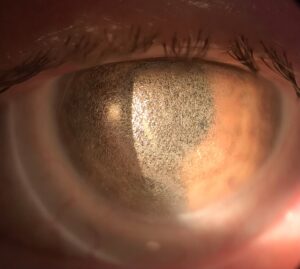
It is also important to evaluate the age and condition of the lens itself. Older scleral lenses that have developed surface crazing (Figure 3) often exhibit persistent nonwetting that cannot be corrected through cleaning or surface treatments alone. In these cases, lens replacement is generally the best solution.
Long-Term Success Depends on Surface Quality
Maintaining a clean, wettable scleral lens surface is essential for achieving consistent vision, lasting comfort, and long-term patient satisfaction.
When patients begin reporting declining vision or shorter wearing times, evaluating the lens surface should be one of the first steps in the troubleshooting process. Identifying whether the issue stems from deposits, nonwetting, or both allows practitioners to implement targeted interventions that can often restore performance without changing the fit itself.
Interested in discussing troubleshooting your scleral lens fits? Schedule a Learning with Lynette session.
